Start with a purpose, not a deadline
A growing pile of paperwork can make every page seem equally important. Instead of starting with a rule such as “throw away anything older than a year,” ask what each document helps you do. Does it require a response? Does it explain an ongoing arrangement? Could you reasonably need it to check a past decision or confirm information later? The answers give you a better starting point than age alone.
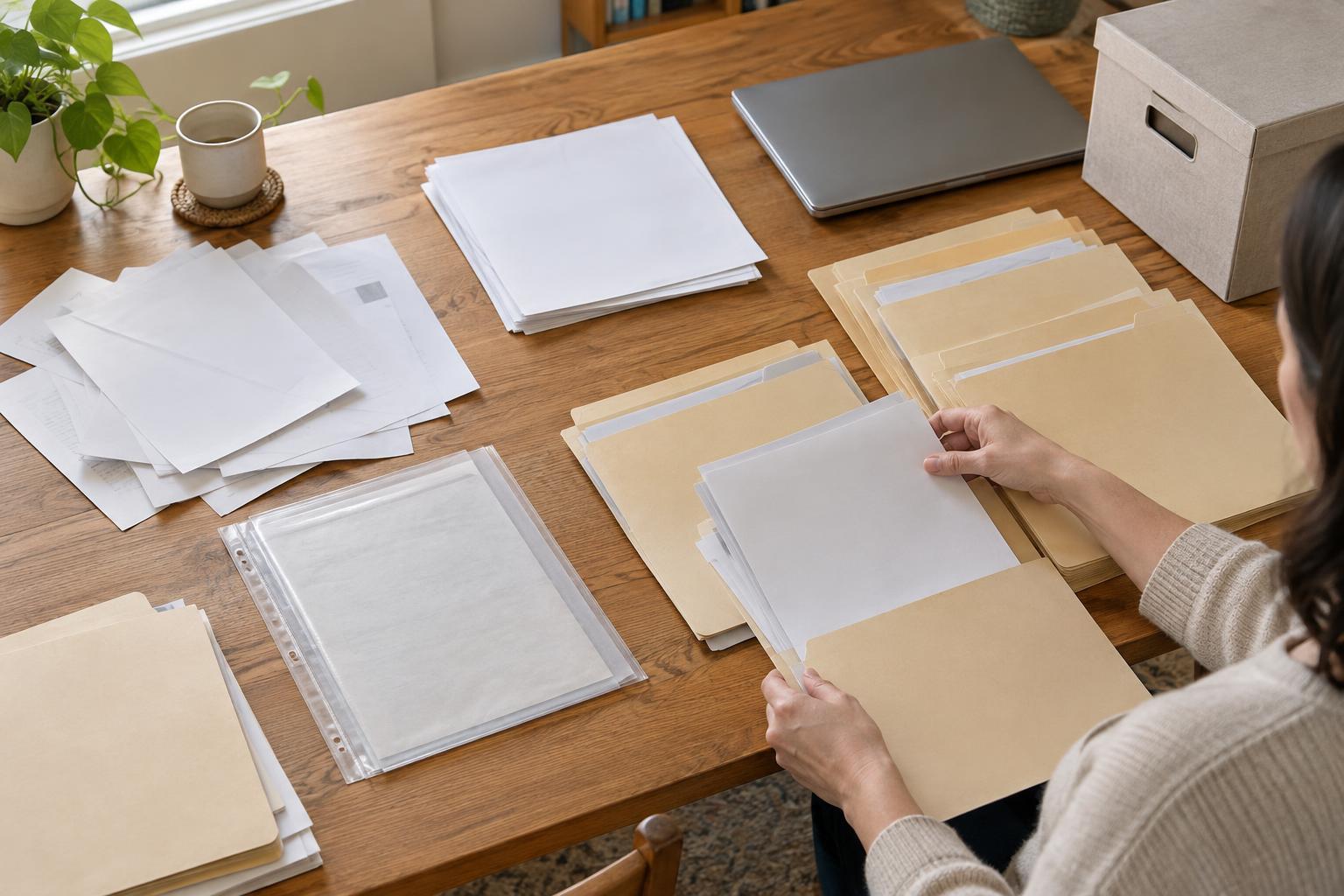
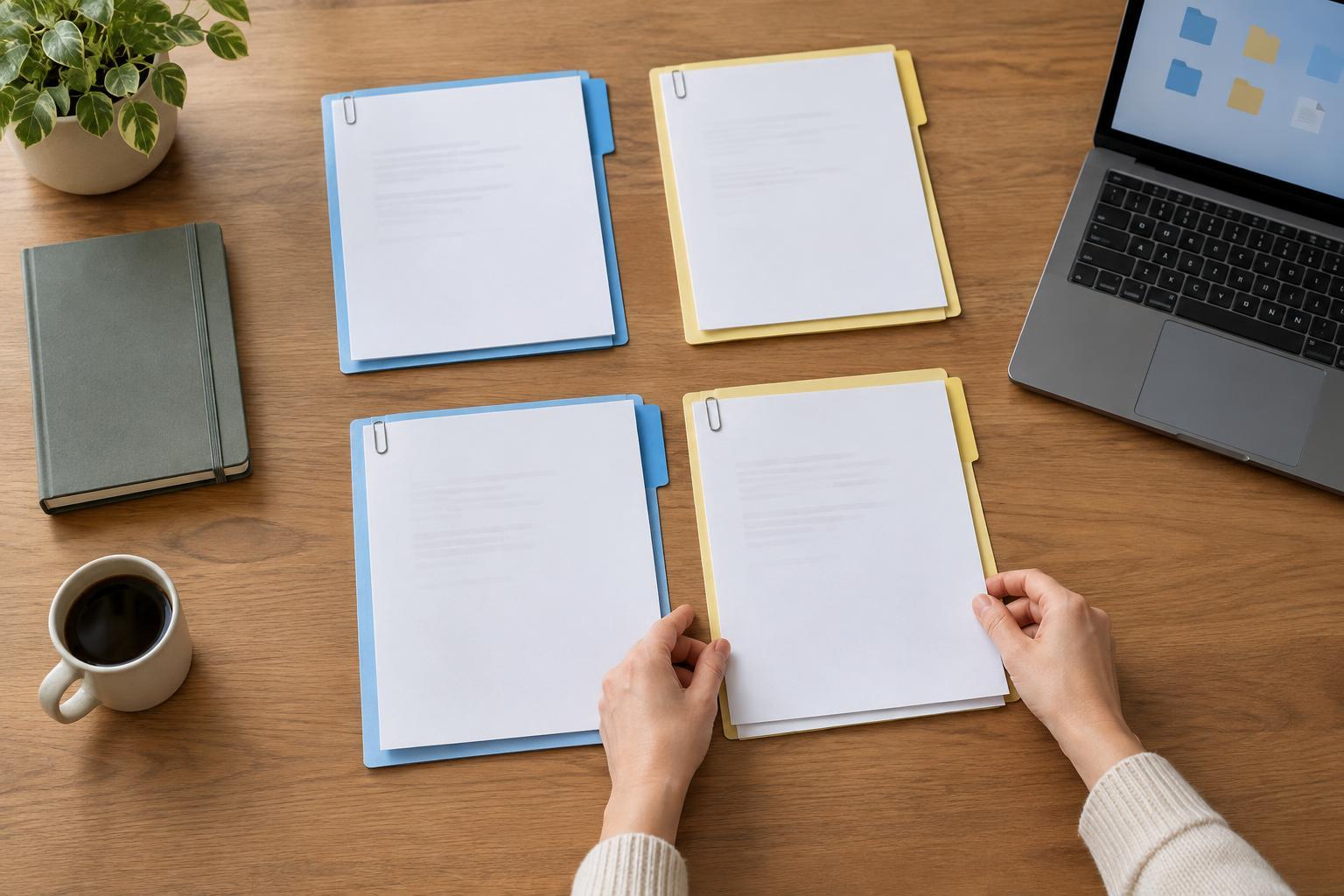
Set up four temporary groups: act on, keep handy, archive, and consider for disposal. “Act on” is for forms, requests, and letters with a next step. “Keep handy” is for information you use regularly. “Archive” is for records that may still matter but do not need to be close at hand. The last group is for material that appears to have no continuing purpose. If you are unsure where something belongs, set it aside for a second look rather than making a rushed decision.
Review paperwork when something changes
A review is most useful at a natural turning point: after a request has been resolved, an account has closed, a service has changed, or a newer document has replaced an older one. Read the document’s title and date, then check whether it contains a deadline, reference number, decision, agreement, or instruction you may need to revisit. A letter that looks routine may be the clearest record of what happened and when.
Before moving a document out of your active files, check whether another person involved in the matter may still need it. This is especially helpful when organizing records for someone you care for. Keep their paperwork distinct from your own, respect their preferences and privacy where possible, and avoid assuming that every document can be shared simply because you help manage day-to-day tasks.
If a document relates to an unresolved question, complaint, appeal, debt, property matter, or other dispute, pause before disposing of it. Retention requirements can vary by document and situation. Check any instructions supplied with the record or seek appropriate qualified guidance if you cannot tell whether it is safe to discard.
Archive records so you can find them again
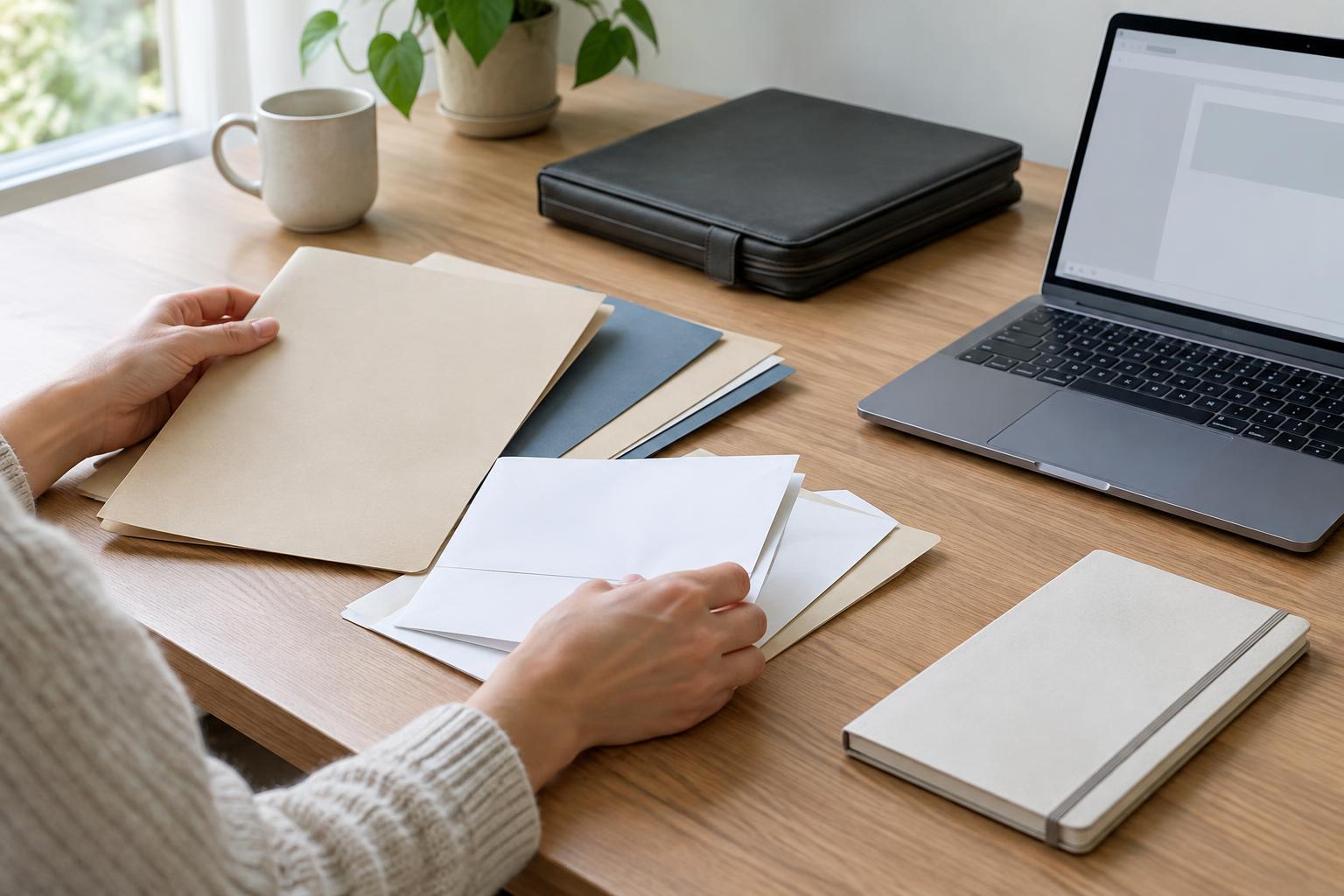
Archiving should make older information easier to retrieve, not merely move clutter into a box. Use broad labels that make sense to you, such as housing, care, education, work, or household services. Within each group, arrange papers by topic or year and keep related letters together. An envelope marked with the subject and a date range is often more useful than an elaborate filing system that is difficult to maintain.
For digital records, choose clear file names that include the subject, document type, and date where known. Keep an original copy of important documents if its format, signature, or markings may matter. If you scan paper, check that every page is legible before deciding what to do with the original. A scan is convenient for reference, but it may not always serve the same purpose as the paper version.
Protect archived information as well as you organize it. Store paper away from casual view and avoid leaving sensitive scans in a shared downloads folder. If you use cloud storage or a backup drive, consider who can access it and whether you can recover your files if a device is lost.
Dispose of what no longer serves a purpose
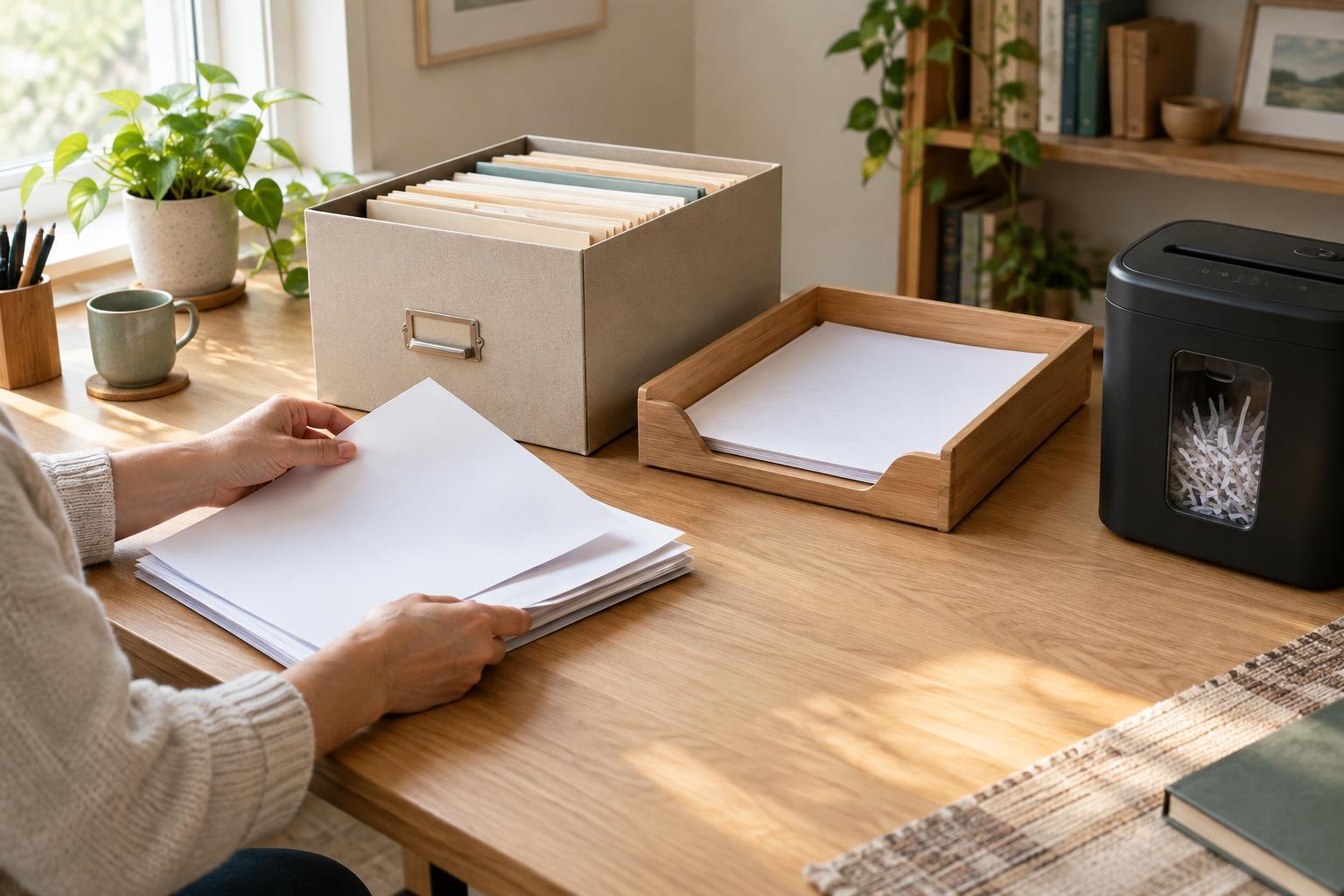
Once you are confident a document is no longer needed, choose a disposal method based on what it reveals. Blank envelopes and general leaflets may be suitable for ordinary recycling. Pages showing names, addresses, account details, identification numbers, signatures, or private circumstances deserve more care. Shredding is one option; a secure document-disposal service may be useful for a larger volume. Remove plastic sleeves, clips, or other materials as required by your local recycling or disposal service.
Digital disposal needs attention too. Deleting a file from a folder may leave copies in email, a recently deleted area, a synced device, or a backup. Review those locations where practical, and use the secure erase or reset guidance for a device before passing it on. If you share an account or device, check whose files might be affected before deleting anything.
Make the next review easier
A small, repeatable habit is more useful than a perfect filing system. Give incoming paperwork one place to land, open it regularly, and separate items needing action from those ready to file. Add a short note to an active document if you have responded or are waiting for an answer; that can prevent repeated searches and confusion later.
Keep a brief list of what you have archived and where it is, particularly if documents are spread across paper folders and digital storage. When you revisit an archive, ask the same questions again: Is this still useful, has it been replaced, and is there any reason to keep the original? That steady review helps you reduce clutter without losing information you may need.