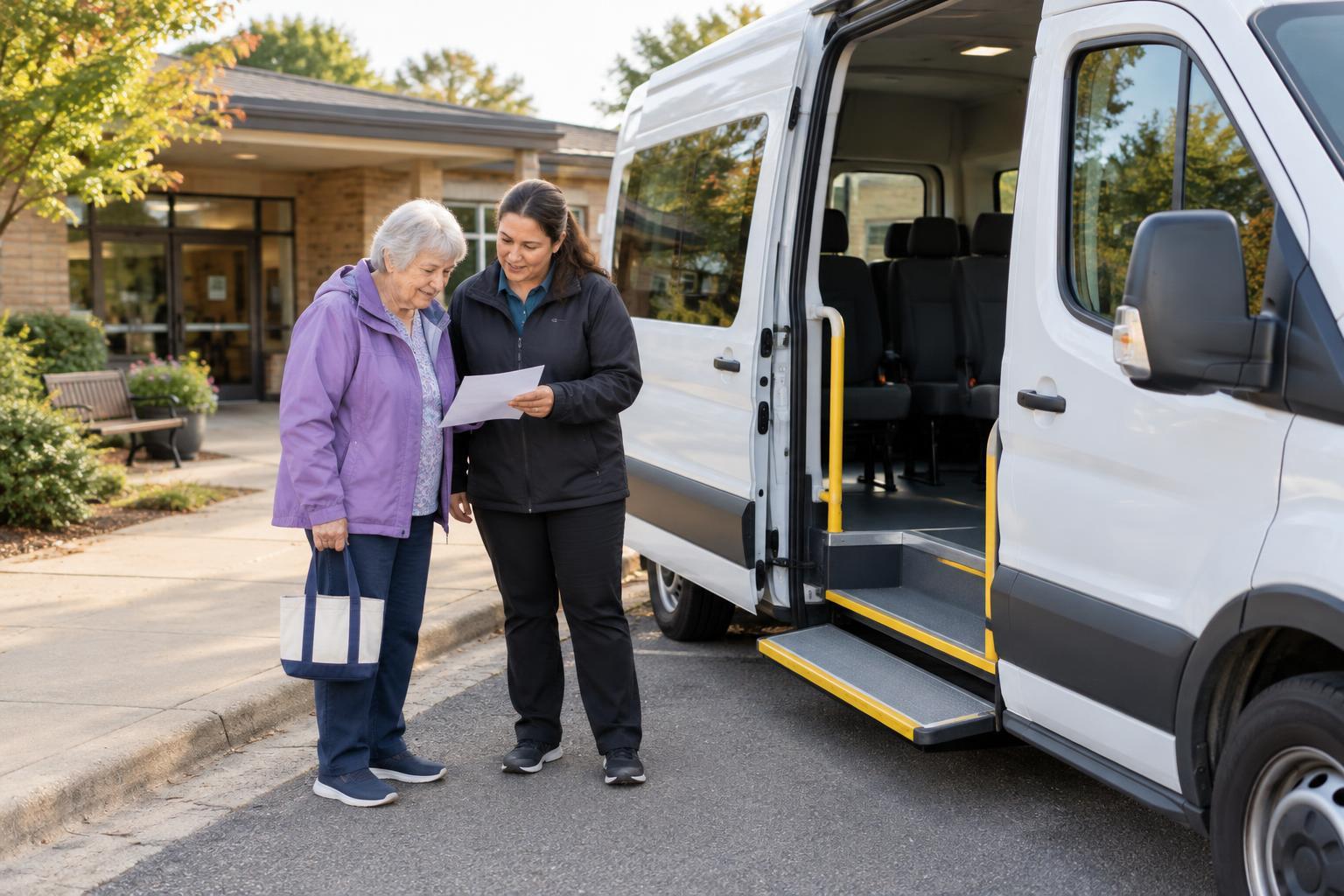
Start with the journey, not the service
A regular appointment, class or community activity can involve more than a ride from one address to another. There may be a long walk to a stop, a difficult entrance, time needed to check in, or a return journey that is hard to predict. Begin by writing down where the person needs to go, how often, the usual start and finish times, and how flexible those times are. Note any equipment, bags or companions that must travel too.
Describe the support needed at each stage rather than relying on a broad label such as “accessible transport.” For example, someone may be able to board a vehicle independently but need help finding the correct entrance. Another person may need a step-free vehicle, space for a mobility aid, or enough time to board without rushing. This makes it easier to ask providers precise questions and avoids assuming that every service offers the same kind of help.
Compare options against a consistent checklist
Possible options include public transport, local community transport, volunteer driver schemes, taxis, rides from family or friends, and transport arranged by an activity provider. Availability, eligibility, booking rules and costs can vary by place and service. Check details directly with the provider before building a routine around an option. If you are using an online listing, look for a current contact method and confirm the service details rather than treating the listing as a booking guarantee.
For each option, ask about the areas served, operating hours, booking notice, fares, payment methods and cancellation rules. Also ask whether the service can accommodate the specific equipment or assistance required, and what happens if an appointment runs late. A low fare may be less useful if the return trip cannot be arranged reliably. Keep brief notes in the same format for every option so the practical differences are easy to compare.
Build a repeatable booking routine
Once an option looks workable, turn the journey into a simple routine. Record the preferred pickup point, destination entrance, appointment time, estimated travel time and provider contact details. Allow time for traffic, boarding and check-in without making the schedule unnecessarily demanding. For a recurring trip, ask whether each ride must be booked separately or whether repeat bookings are possible. Confirm how and when the return trip is arranged.
A shared calendar or paper schedule can help everyone involved see what has been booked and what still needs attention. Include a place to record booking references, pickup windows and any changes. If several people help with transport, agree who makes bookings, who confirms them and whom the traveler should contact if plans change. Keep personal information limited to what each helper or provider actually needs.
Plan for delays and missed connections
Even a dependable arrangement can be disrupted. Identify one realistic backup for an important regular journey, such as a different transport provider or a person who has agreed they may be contacted. Check in advance whether the destination can offer a later arrival time or another appointment if travel falls through. Do not assume that a companion or volunteer will always be available at short notice.
Make a short “what if” plan that the traveler can use: who to call if the vehicle does not arrive, how to contact the destination, and where to wait safely. If someone else is coordinating the trip, make sure the traveler knows the agreed pickup details too. A written plan is particularly helpful when different helpers take turns or when a journey happens only once every few weeks.
Review the arrangement as needs change
After a few journeys, ask what worked in practice. Was the pickup point easy to find? Did the schedule leave enough time? Was the return trip comfortable to manage? Small adjustments, such as choosing a different entrance or booking an earlier pickup, may make a regular activity much easier to attend. Give the traveler room to describe their preferences rather than judging the plan only by whether they arrived on time.
Recheck service details when appointment times, mobility needs, helpers or transport providers change. Keep contact numbers and booking notes together, and remove outdated instructions so nobody follows an old plan. The goal is not a perfect schedule that never changes; it is a clear, manageable arrangement that supports participation while making changes easier to handle.