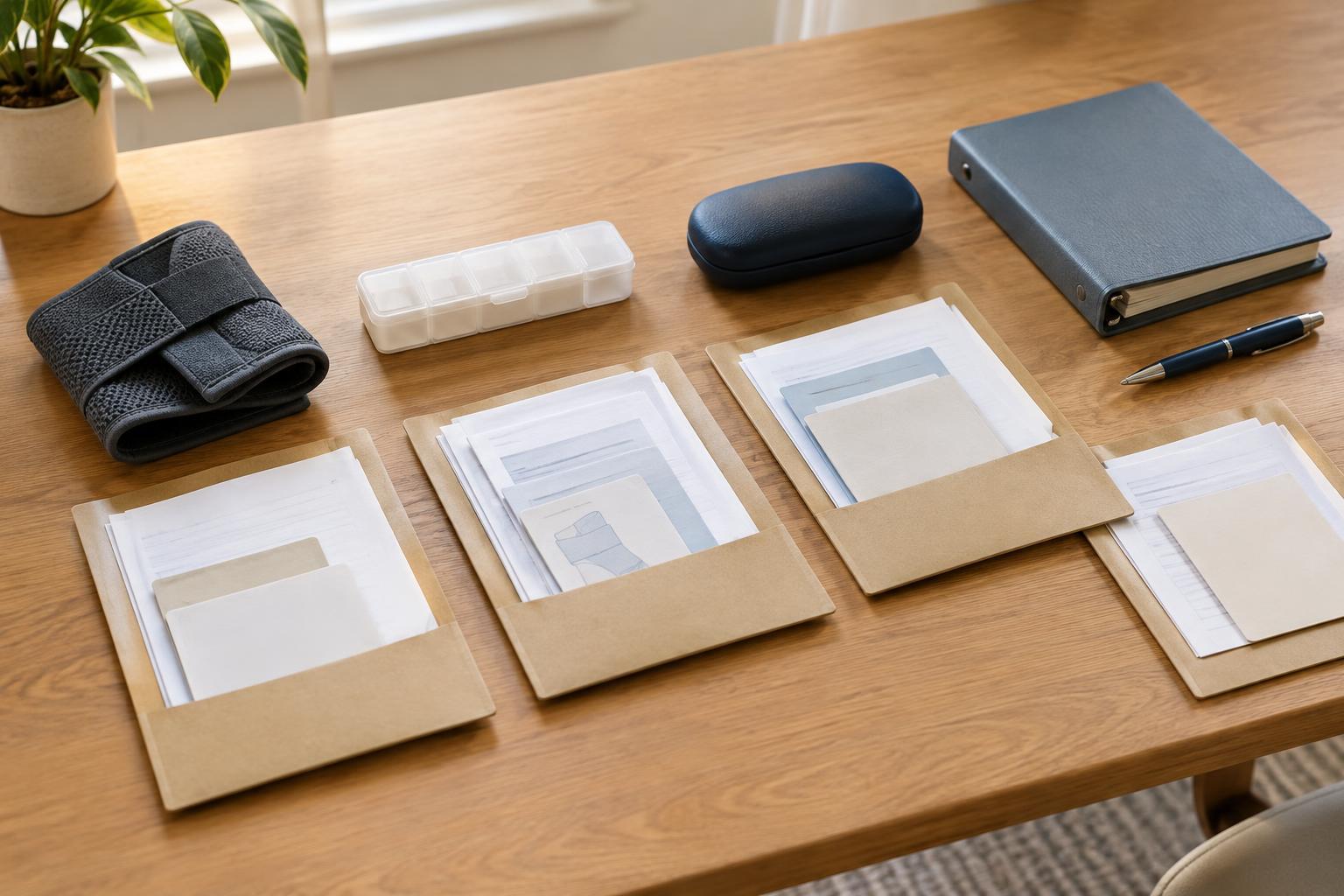
Start with the information you may need again
Care supplies and personal items often come with small pieces of paperwork that are easy to misplace: a receipt, a fitting note, cleaning instructions, or a warranty card. The aim is not to save every scrap of packaging. It is to make useful information available when an item needs care, replacement, or a conversation with a supplier.
Choose a place for records connected to items used regularly. This could be a paper folder, a digital folder, or both. Keep it separate from general correspondence so that a product instruction is not buried among appointment letters and forms. If you organize records for someone else, agree on a location and naming approach that they can understand and use where possible.
Begin with a short list of items whose details would be inconvenient to reconstruct. For each one, note its name, the supplier if known, and where the item itself is kept. This list is an index, not an inventory of everything in the home. It helps you decide which records are worth putting in the folder.
Group records by item, not just by document type
A single item may have a receipt, user instructions, care guidance, and a record of adjustments. Keeping those pieces together makes it easier to understand its history. Use a labeled envelope or divider for paper records. In a digital folder, give the item its own subfolder and use clear filenames such as “purchase receipt” or “cleaning instructions.”
If several people in a household use similar items, include the person’s name in the label where appropriate. Avoid putting sensitive details on the outside of a folder that visitors may see. A neutral label can still be specific enough for household members to find what they need.
Some records relate to more than one item, such as a general supplier contact sheet. Store the main copy in one predictable place and add a note pointing to it from the relevant item folders. That is usually clearer than keeping several copies that may later contain different information.
Keep a brief record of changes and replacements
A simple log can answer practical questions that a receipt alone cannot: When was an item replaced? Which size or version worked well? Was a particular cleaning method unsuitable? Record the date, the item, and a short factual note. Keep observations separate from instructions supplied by a manufacturer or service provider so the two are not confused.
When you receive an updated instruction sheet, check whether it applies to the item you have before removing an older one. If you keep both, mark which sheet you currently use and why. For digital records, a filename that includes the item model or version can help prevent an instruction for one product from being mistaken for another.
Do not assume that a purchase record will be needed by a public service, or that a particular expense will be covered. Requirements differ. If an organization asks for evidence, use its own published instructions to check what it requests and how it wants records submitted. Your folder should help you locate information, not decide what an organization will accept.
Make the system easy to maintain
Set aside a few minutes when a new item arrives to file its useful documents and add it to the index. When an item is no longer used, review its folder rather than leaving it mixed with current records. You may want to retain a purchase or warranty document for a while, but the right choice depends on its purpose and your circumstances. If you discard paperwork, take care with any personal details on it.
Keep product-browsing information separate from essential records. For example, someone organizing records for hairwear might browse Styling Techniques · Wig and Hairwear Guide for styling ideas, Hair Accessories · Wig and Hairwear Guide for accessory options, or Care and Storage · Wig and Hairwear Guide for care and storage ideas. Those pages can be useful for exploring products and routines, but they should not replace the instructions for a specific item you own.
Finally, test the folder by trying to find one instruction sheet and one purchase record without searching through everything. If either takes too long, simplify the labels or update the index. A workable system is one that the people using it can maintain, even during a busy week.