Start with a place for each person
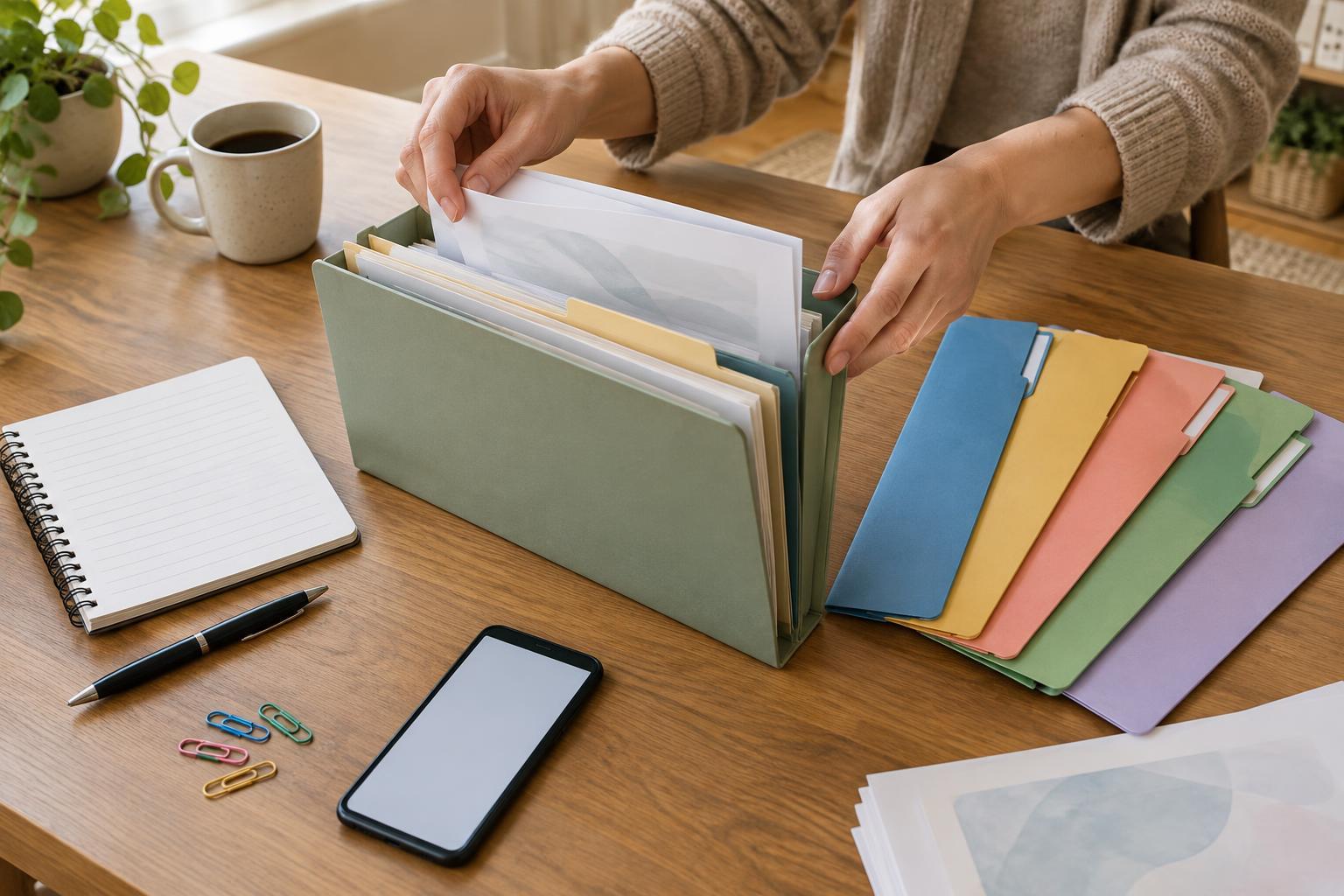
In a busy household, letters and forms often arrive together. If everyone’s paperwork goes into one pile, it can be hard to tell which notice needs attention or which version of a document belongs to whom. Begin with one clearly labeled folder, binder section or document box for each person. Use the name they normally use on correspondence, and check the full name on each document before filing it.
Inside each person’s space, keep a few broad groups, such as identity documents, education or work, health, housing, and public-service correspondence. You do not need a complicated system: categories are useful only if everyone who helps with filing can understand them. A small “to review” pocket for each person can hold new mail until it has been read and put away. This keeps unfinished tasks separate from records you are saving.
Give shared documents their own home
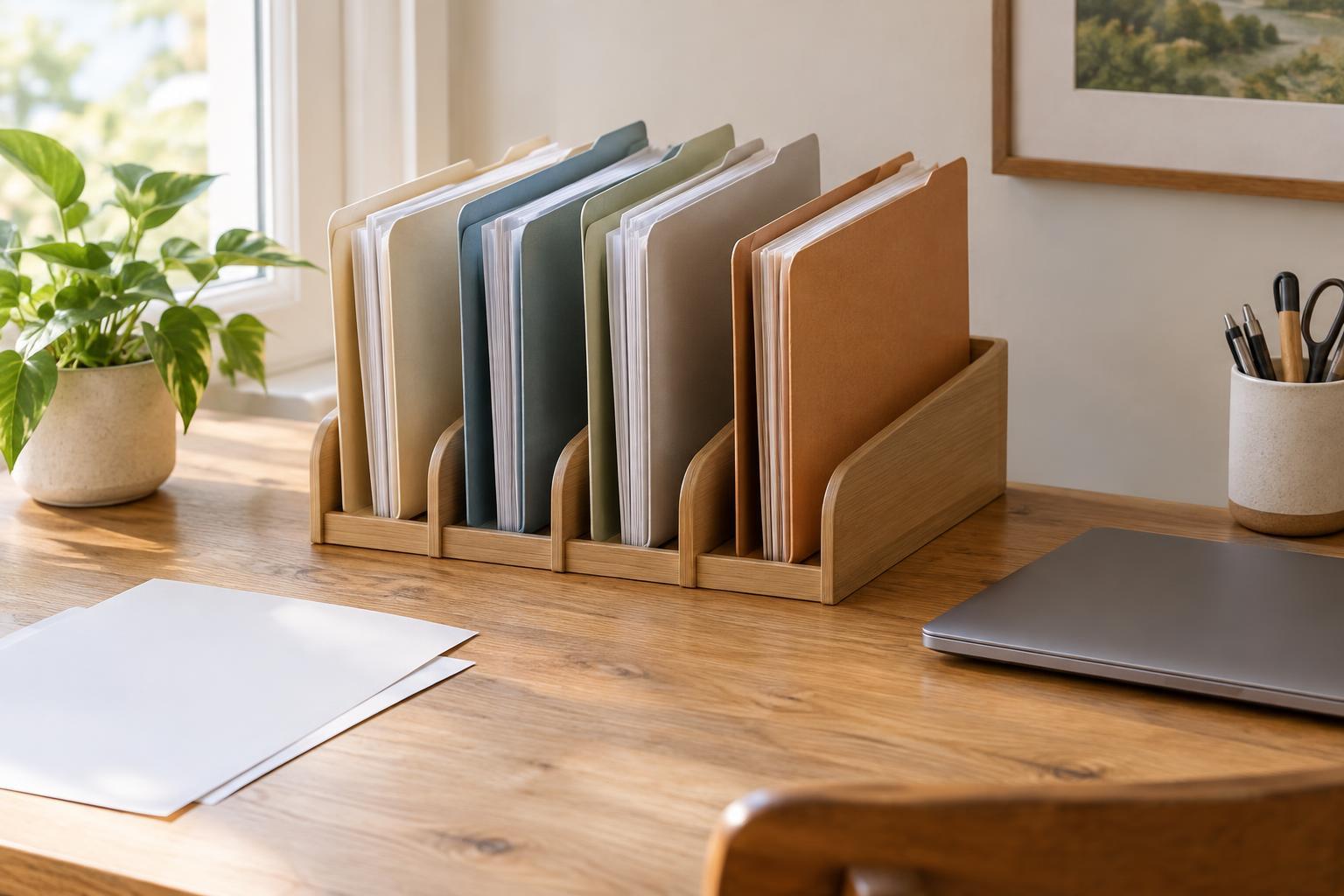
Some records describe the household rather than one person. A lease, utility statement or shared insurance letter may be needed alongside an individual’s paperwork, but filing the only copy under one name can make it difficult for someone else to find. Create a separate “household” folder for these records. If a shared document is relevant to an individual folder, add a note there saying where the original is stored.
Be especially careful with forms that list several household members. File them in the shared folder if they concern the household as a whole, or with the person responsible for the matter if that is clearer. The aim is to choose one consistent location, not to make multiple loose copies that may later be mistaken for the most recent version.
Use names and dates to prevent mix-ups
People in the same home may have similar names, and several may receive letters from the same organization. Before filing or scanning a page, look for identifying details such as the full name, address and reference number. Read enough of the document to understand who it concerns, but avoid writing sensitive numbers on the outside of folders. Labels should help you navigate the system without exposing private details.
Within a folder, sort correspondence by topic and then by date, with the newest item at the front or back—whichever approach you will use consistently. Keep related pages together, including any instructions or response forms that arrived with a letter. If you make notes about a phone call or a task, date the note and identify whose matter it concerns. That small step can make the record easier to understand later.
Apply the same structure to digital files
Digital documents can become just as mixed up as paper. Create a main household folder, then a folder for each person and one for shared records. Give files descriptive names that include the person, document type and date where appropriate—for example, “Alex_application_receipt_2025-03.” Avoid putting account numbers or other sensitive details in file names, especially if files may appear in search results or shared screens.
Decide where the working copy of each digital record will live. If you scan a paper letter, check that every page is readable before filing the scan. If you keep important files on a device or in online storage, consider a separate backup and review who can access each location. Shared devices and accounts deserve particular attention: a tidy folder structure does not protect privacy if everyone can open every folder.
Make the system safe and manageable
Not every household member should have the same access to every record. Store originals and sensitive papers somewhere secure, and agree on a way to retrieve them when needed. If you help another adult organize their documents, ask how they want their information handled rather than assuming that living together means everything should be shared. For children or someone receiving care, keep clear labels so a helper can find the right record without searching through another person’s papers.
Set aside a short, regular time to file new items and clear the “to review” pockets. When you are unsure whether to discard a document, place it in a dated “check before disposing” folder rather than throwing it away immediately. Requirements for keeping particular records can vary, so consult the relevant organization’s official guidance when retention matters. A useful system is one that helps your household find the right document while respecting each person’s privacy.