Start with the barrier you need to address
An accessibility accommodation is a change that helps someone use a service despite a barrier. The barrier might be a step at an entrance, a long period of standing, difficulty hearing a caller, or a form that is hard to read. The useful question is not whether you know the right term for an accommodation. It is what prevents you from taking part and what would help you complete the task.
Needs differ from person to person and from one task to another. Someone may be able to make a short phone call but need another way to handle a lengthy interview. A person who can enter a building may still need a quieter space to discuss a complicated matter. Describe the task, the barrier, and the adjustment you are asking for. For example: “I need to discuss my application, but I cannot manage a long call. Can we arrange shorter calls or another accessible way to communicate?”
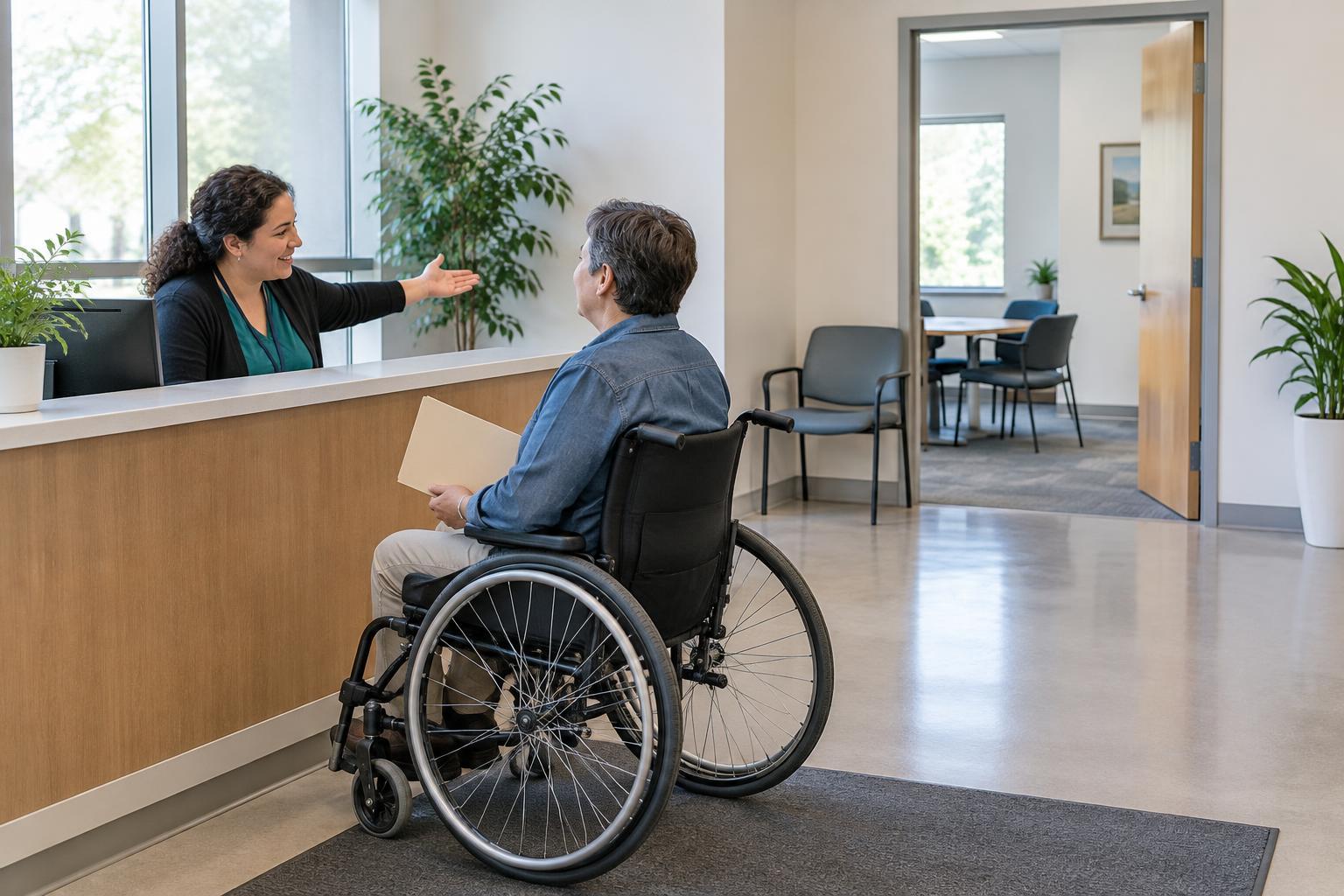
Plan ahead for an in-person visit
If you can contact an office before traveling, ask about the parts of the visit that may affect you: step-free entry, accessible toilets, seating, waiting arrangements, communication support, or the format of forms. Ask whether you need an appointment and how to request an adjustment for one. Public service locations and procedures vary, so confirm arrangements with the specific office rather than assuming a feature listed for another location will be available.
Bring the documents you expect to need, along with any appointment details and a short list of questions. If reading, writing, hearing, or processing information in a busy setting is difficult, you can ask whether an employee can explain a form, provide it in a different format, or give you time to review it. You can also ask whether a support person may accompany you. Check in advance if that person will need your permission to hear private information or speak on your behalf.
On arrival, tell staff about any arrangement made in advance. If it is unavailable, explain what part of the visit you cannot complete and ask what alternative is possible that day. You do not need to give a detailed personal history to describe an immediate access problem. Keep the discussion focused on what you need to use the service.
Make telephone contact work for you
Telephone barriers can include hearing or speech difficulties, trouble following fast explanations, limited time before fatigue sets in, or difficulty using an automated menu. Before calling, look for the service’s published contact options and any information about relay services, interpreters, text-based contact, or booked callbacks. Availability varies. If you use a relay service or communication assistant, ask how the office handles those calls and whether any identity checks will be needed.
At the start of a call, state your communication need in plain language. You might ask the employee to speak more slowly, pause while you take notes, repeat an important detail, or explain one step at a time. If the call cannot be completed accessibly, ask about another channel or an appointment at a suitable time. Before ending, repeat your understanding of the next step, any documents requested, and how you will receive a response. This gives the employee an opportunity to correct a misunderstanding.
Keep privacy and records in mind
Public services may need to check your identity before discussing a personal case. An accommodation request does not necessarily remove that step. If someone is helping you communicate, ask what the office needs in order to include them in the conversation. Share personal details only through contact methods you have verified as belonging to the service; do not send identity documents to an address or number simply because someone asks for them.
A brief record can make follow-up easier. Note the date, the service you contacted, the adjustment you requested, and what staff said would happen next. Keep appointment messages and accessible-format documents together with your other case papers. If an arrangement is important to a future visit or call, ask whether the office can record it or confirm it in writing. Records help you explain the situation without having to reconstruct every conversation.
If the arrangement does not work
An agreed adjustment may be missing, or a proposed alternative may not solve the barrier. Explain the specific problem and ask for another workable option: “I received the form, but I still cannot read this version. Is another format available?” If the person you reach cannot help, ask who handles accessibility requests or how to raise the issue through the service’s published feedback or complaint process. Describe the task you were trying to complete, the barrier, and the outcome you need.
Procedures and available options depend on the service and location. For accurate next steps, use the relevant public service’s official website, published phone number, or office information. An independent guide can help you prepare questions, but the service itself is the place to confirm its process and make an accommodation request.