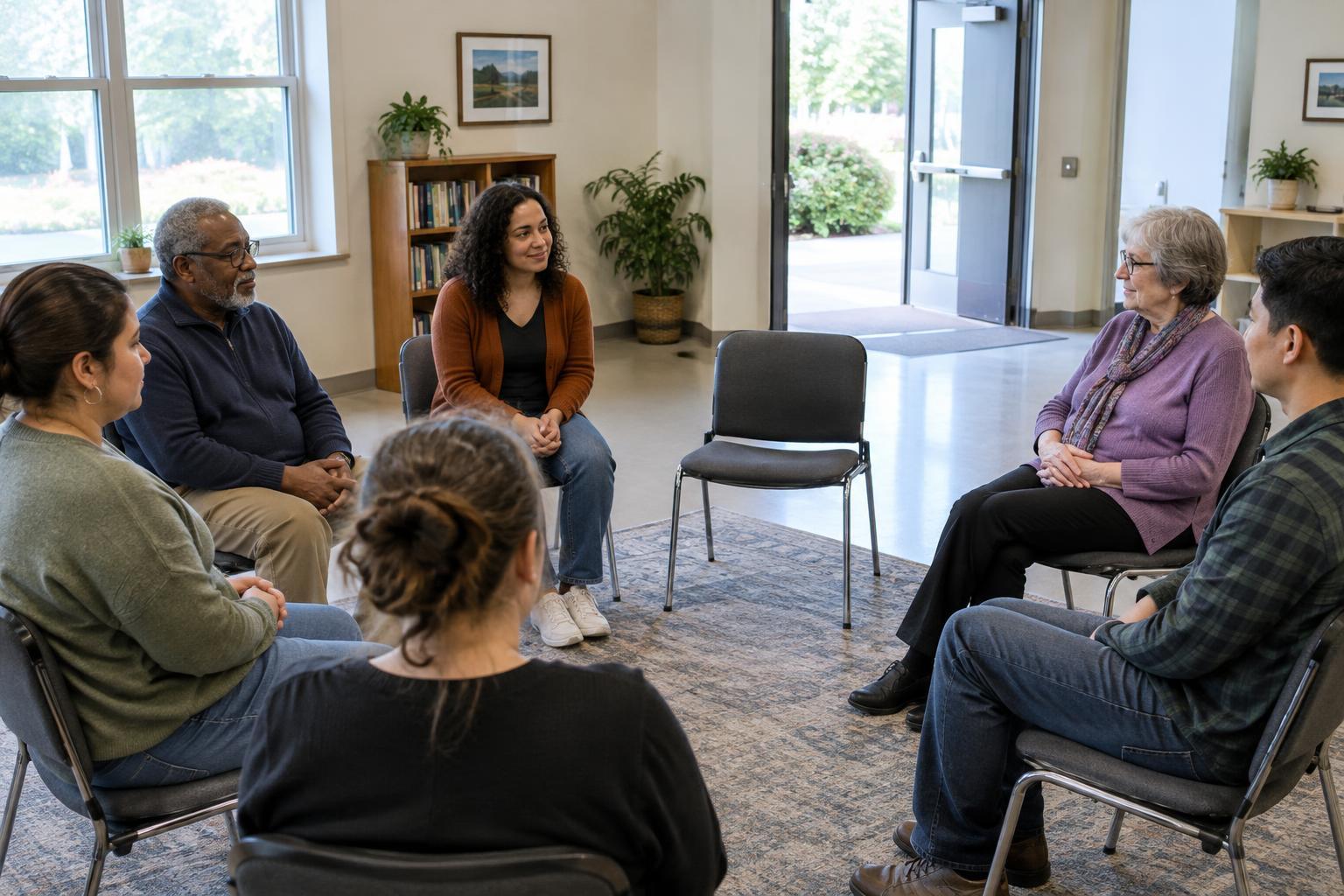
Start with the activity, not the obstacle
A good social activity begins with something you enjoy. A book discussion, craft group, music session, gardening club or shared meal may be more appealing than an event chosen only because it is described as accessible. Make a short list of interests you would like to explore and the kind of company you prefer. A small, quiet group may feel easier than a busy gathering; a recurring activity may make it easier to get to know people.
Then think about what would make participation comfortable. Limited mobility can mean different things from day to day and from person to person. You might need a place to sit, room for a mobility aid, a short distance from transport to the entrance, or the option to leave early. Writing down your priorities helps you ask focused questions without having to explain more about yourself than you want to.
Look in several places
Libraries, community centres, faith and cultural groups, adult learning programmes and local interest clubs can be useful starting points. Their noticeboards, newsletters or event calendars may list both one-off gatherings and regular groups. If you use an online community listing, check who organises an activity and contact that organiser directly for details that matter to you. An event described as “accessible” may still lack the particular feature you need.
People you already know can offer another route in. Ask a neighbour, friend, support worker or family member whether they know of a group related to your interests. You can ask for a contact rather than a recommendation: an activity that suits someone else may not suit you. If you would rather not attend alone, you might invite someone to join you for the first visit or ask the organiser whether they welcome newcomers individually.
Check the practical details before committing
A brief call or message can prevent a difficult journey. Ask whether the entrance is step-free, whether there is an accessible toilet, how seating is arranged and how far participants need to move during the activity. If relevant, ask about nearby drop-off points, parking or public transport, and whether there is space for a wheelchair or other mobility aid. Access information on a listing may be incomplete, so it is reasonable to request specifics.
The format matters as much as the building. Find out whether people can participate while seated, take breaks, bring a companion or arrive a little late. Ask about the cost, whether registration is required and whom to contact if plans change. You do not need to ask every question at once; choose the details that will help you decide whether attending is realistic.
Even with careful planning, conditions can change. If a particular feature is essential, consider confirming it shortly before the event. A simple backup plan—such as a way to get home or an alternative online activity—can make trying something new feel less daunting.
Consider social connection from home
In-person activities are not the only way to participate. Online reading groups, hobby sessions, games and community meetings can make conversation possible without travel. Some groups also offer phone participation. If using a device is difficult, ask whether an organiser provides instructions in advance or allows you to test the connection before the first session. A familiar friend may be able to help you practise joining without taking over the activity.
Remote activities have their own access needs. Check whether sessions have captions if you use them, whether you can keep your camera off, and whether there are breaks. Be cautious about sharing personal details in unfamiliar groups. Look for a clear organiser, basic participation rules and a straightforward way to leave or report a problem. A welcoming online space should let you take part at a level that feels comfortable.
Try one step and adjust
You do not have to commit to a full calendar. Choose one activity that seems interesting and manageable, and treat the first visit as a chance to learn. Afterwards, ask yourself whether you enjoyed the conversation, whether the setting worked for you and whether the effort of attending felt worthwhile. If it did not, that is useful information rather than a failure.
Social connection can take many forms: a regular class, an occasional event, a phone conversation or a small gathering you help arrange. Your needs and energy may vary, so a mix of options can be more useful than relying on one group. The aim is not to attend as much as possible; it is to find ways of spending time with others that you can enjoy and sustain.